Lighting in architecture : MMGS Architects approach
Nawanjana Sooriya ArachchiAugust 2021
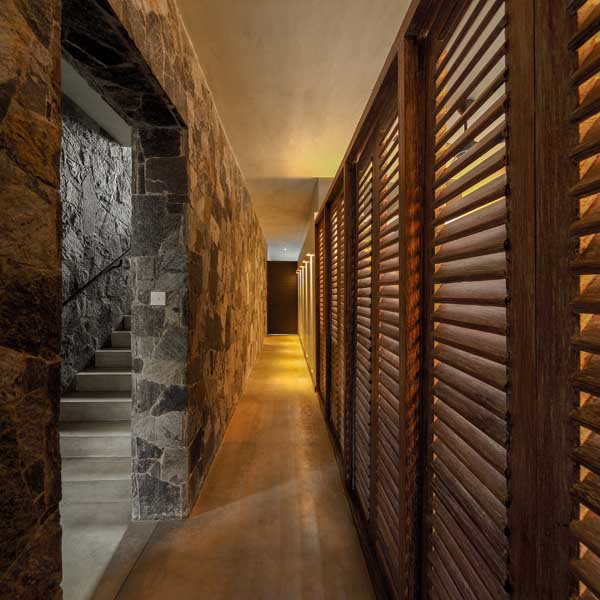
The use of light is a crucial element in architecture that not only makes it functional and habitable, but also dictates the ambiance and the aesthetics of the spaces.
Light can be obtained through both natural sources and artificial sources, with the sun acting as the primary source of usable natural light. Artificial sources of light include incandescent lamps, LEDs and other human-made objects that emit visible light using electricity.
Use of natural light, although sustainable in terms of visibility, may introduce excessive heat and glare particularly in the tropics. The practice of orienting windows and other openings on the North and South faces of the building, away from the direct sun path, reduces direct light and permits reflected light, thus reducing heat and glare within the internal spaces. In addition to this, using shades, awnings and canopies allows to further reduce direct light, and is primarily used when locating windows on the direct sun path is unavoidable.
Artificial light, generally used in the absence of daylight, can be broadly classified into warm white, cool white and daylight depending on the color of the light. The desired functional, aesthetical and effective aspects of the space dictate the use of the different colors of light.
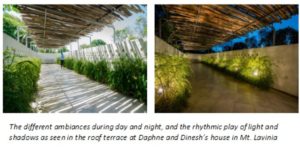
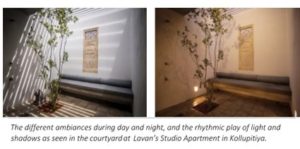
The use of warm light creates a cozy and relaxing ambience and is highly preferred in a residential setting, whereas cooler tones are effective in active and dynamic spaces like offices, factories and medical institutions.
The play of light and shadows during different times of the day creates varying ambiances within the same space. The constant shift of shadows casted as well as the transition from day to night allows for a single space to accommodate multiple function as well as levels of comfort.
The deliberate and rhythmic use of shadows alongside varying light levels adds to the character and the ambience of the space. The use of pergolas and jungle poles were a creative solution that provided shade from direct light while permitting controlled amounts of light to enter.
This play of light stands out in the courtyard at Lavan’s Studio Apartment as well as at the roof terrace at Daphne and Dinesh’s house in Mt. Lavinia.
Successful lighting of spaces requires a careful balance between the use of natural and artificial light as well as a methodical play of light and shade to create an experiential journey through spaces.
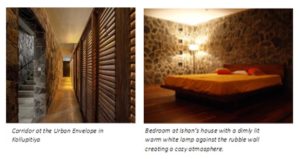
For instance, the meticulous play of natural light and warm white light within the corridors and the staircase of the Urban Envelope enhances the transition of spaces and moods. Further more, lighting is divided into 4 broad categories based on their use; ambient lighting, task lighting, accent lighting, and decorative lighting.
Ambient lighting is used to provide comfortable levels of lighting to occupy a space.
The lighting selected for a particular space reflects the required ambience and mood. Rooms lit with low levels of warm light warm light end to have a cozier and relaxing atmosphere and is considered suitable for bedrooms, as shown in the bedroom at Ishan’s house. The low level of light used complements the black rubble walls used, enhancing the coziness of the space.
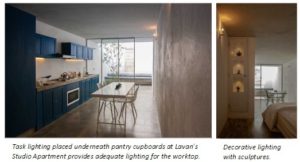
Task lights are more function-oriented and are focused on providing light for specific tasks. This is commonly used in changing rooms, libraries, shops and can also be seen is residential settings where lights are placed under pantry cupboards to efficiently light-up the countertop.
While accent lighting is used to highlight specific areas within a space, decorative lighting is less focused on illuminating a space and is primarily used to bring attention to decorative features within a space, as seen in the duct door niches at Lavan’s Studio Apartment.